Reflections and Resources for Lifelong Learning for Missionaries

Category: Character Page 9 of 17

missions in midst of crisis
Photo by Denniz Futalan from Pexels

Book Review: Practicing Hope: Missions and Global Crises

Every year the Evangelical Missiological Society publishes a monograph containing papers from the previous year’s annual meeting. This year’s title is Practicing Hope: Missions and Global Crises, edited by Jerry Ireland and Michelle Raven. Yet before we assume the book is talking about COVID-19, we need to remember that when these papers were presented, no one knew a pandemic was coming. Jerry Ireland notes:

Practicing Hope

In September 2019 almost 300 missionaries, missiologists, sociologists, theologians, anthropologists, and students gathered near Dallas for the annual meeting of the Evangelical Missiological Society. The theme was “Missions Amid Global Crises.” I do not think that any of us would have dreamed that eight months later the world would be engulfed in a global pandemic because of the Coronavirus (COVID-19).1Jerry Ireland and Michelle Raven, eds. Practicing Hope: Missions and Global Crises. Evangelical Missiological Society, 2020, xiii.

Overview of book

Though none of the twelve chapters address the current pandemic crisis, these papers give us much to learn and apply. The chapter titles are:

collaborating prayer

Exploring Spiritual Formation: Grief – Part 2

This is the second of two posts that explore the subject of grief in the life of a believer. Part 1 presented the hallmarks and pitfalls of grief, along with a biblical perspective of grief. This month, in Part 2, the post will present ways we can prepare ourselves for, and respond to, grief. 

Pandemic Grief

I am an introvert. Actually, I’m a flaming introvert. Which means that, though I love people and find them interesting, I really, really, like to be alone. Fortunately, I married an introvert. And though we love being together, we’re also adept at making space for one another. Thus, you can imagine my surprise when I noticed myself suffering from loneliness during the COVID-19 lockdown and subsequent work-from-home state of affairs—a situation I thought was made for introverts.

After some introspection, I realized I was missing my co-workers. Though we’ve seen each other over the Internet, I miss being with them, in person. I miss our impromptu prayer sessions. I also miss having lunch together. And I miss regularly sharing chocolate, coffee, spontaneous conversations, and laughter with them.

Wellness after 40
Photo by Tristan Le from Pexels

A book about planning to live well after 40

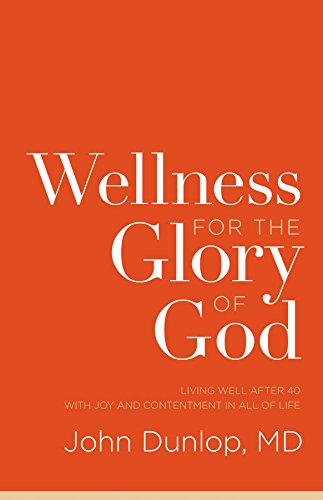
Wellness for the Glory of God: Living Well after 40 with Joy and Contentment in All of Life by [MD Dunlop, John]

What does wellness look like after 40? Why should we care? We find helpful and practical answers in Wellness for the Glory of God: Living Well After 40 with Joy and Contentment in All of Life by John Dunlop, MD. The author focuses on wellness in the second half of life.

In the introduction, he explains what the book is about:


What strategies can we who are getting older adopt that will maximize our chances to endure the challenges of our later days and continue to be well? The essence of this book is expressed in the title. Wellness depends on living with a purpose that goes beyond the here and now. Over and over I have seen that one way in which Christians can stay well in their twilight years is to keep their focus on God, his greatness, and his glory.1John Dunlop, Wellness for the Glory of God, Crossway, 2014, p 12.

The suggested strategies call for changes that can make a difference as we age. Consequently, starting at age 40 is not too early.

Defining Wellness

Dr. Dunlop takes a wholistic approach to wellness. He writes:

. . . wellness is much more than physical health and freedom from distressing symptoms. Wellness involves the whole of our being, which includes six distinct areas: physical, mental, social, financial, spiritual, and emotional. These areas of wellness are not independent but are all interrelated. Each area contributes to the wellbeing of each of the others. At the same time, struggles in one area may distract from wellness in each of the others.2Dunlop, p 21.

understanding grief

Exploring Spiritual Formation: Grief – Part 1

This is the first of two posts that explore the subject of grief in the life of a believer. Part 1 presents the hallmarks and pitfalls of grief, along with a biblical perspective of grief. Next month, in Part 2, the post will present ways we can prepare ourselves for, and respond to, grief.

Loss and Grief

It’s a stunning number: over one million deaths worldwide due to COVID-19 in 2020—with untold millions grieving the unexpected loss of a loved one.

Though loss of life is surely one of the most severe causes of grief, COVID-19 has fostered other losses, such as the loss of jobs, travel, meetings, conferences, businesses, relationships, human connections, gatherings of all kinds, ministry opportunities, and milestone celebrations. Add to this the loss of normalcy, sense of general well-being, and rampant uncertainly about the future, and we have the makings of a pandemic of grief.

As the deer pants for streams of water
Photo by Simon Greenwood on Unsplash

Hope from a Distance: Psalm 42 and 43

The pandemic of 2020 has brought about some new terminology such as “social distancing”, “shelter-in-place”, and “hunker down.” Additionally, travel restrictions have prevented international travel, causing missionary families to miss graduations, weddings, and funerals. Also, many churches have not been able to meet face to face due to local restrictions on size of gatherings. COVID-19 has brought a lot of turmoil into our lives. Where can we find hope from a distance?

Psalm 42 and 43

Over the past several months my thoughts have often returned to Psalm 42 and 43. The writer of these two psalms (probably composed as one) was experiencing separation from public worship for reasons we do not know. The two psalms are characterized by numerous questions and a refrain repeated in Psalm 42:5, 11 and Psalm 43:5. The two stanzas of Psalm 42 are laments and Psalm 43 turns the lament into prayer. Consequently, these two psalms provide us an example of how to move from despair to hope in God even when our questions remain unanswered. We learn to hope from a distance when God’s deliverance is not yet clearly in view.

Page 9 of 17

Powered by WordPress & Theme by Anders Norén