

How will you know when your church plant is ready for you to leave? Can you prepare for that day from the beginning of the work?
In our last blog post, we noted that an exit plan (or transition plan), is a description of what we need to see in place and functioning in the church plant. This vision outlines the essential functions of a church that will continue to thrive without us. At this point, we have completed our work as church planters. When these functions are present, we know that we can either transition to a new role such as equipper and mentor, or we can move on to begin a work in a new area.I’m sure that’s what Jesus had in mind when he told the disciples to make disciples of all nations. There was… Read the whole post
Tag: health

Photo by Tristan Le from Pexels
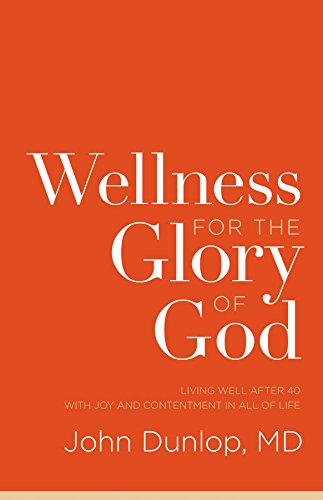
What does wellness look like after 40? Why should we care? We find helpful and practical answers in Wellness for the Glory of God: Living Well After 40 with Joy and Contentment in All of Life by John Dunlop, MD. The author focuses on wellness in the second half of life.
In the introduction, he explains what the book is about:
What strategies can we who are getting older adopt that will maximize our chances to endure the challenges of our later days and continue to be well? The essence of this book is expressed in the title. Wellness depends on living with a purpose that goes beyond the here and now. Over and over I have seen that one way in which Christians can stay well in their twilight years is to keep their focus on God, his greatness, and his glory.1John Dunlop, Wellness for the Glory of God, Crossway, 2014, p 12.
The suggested strategies call for changes that can make a difference as we age. Consequently, starting at age 40 is not too early.
Defining Wellness
Dr. Dunlop takes a wholistic approach to wellness. He writes:
. . . wellness is much more than physical health and freedom from distressing symptoms. Wellness involves the whole of our being, which includes six distinct areas: physical, mental, social, financial, spiritual, and emotional. These areas of wellness are not independent but are all interrelated. Each area contributes to the wellbeing of each of the others. At the same time, struggles in one area may distract from wellness in each of the others.2Dunlop, p 21.